Nutrient profile
Liver nutrients: retinol, B12, copper, iron
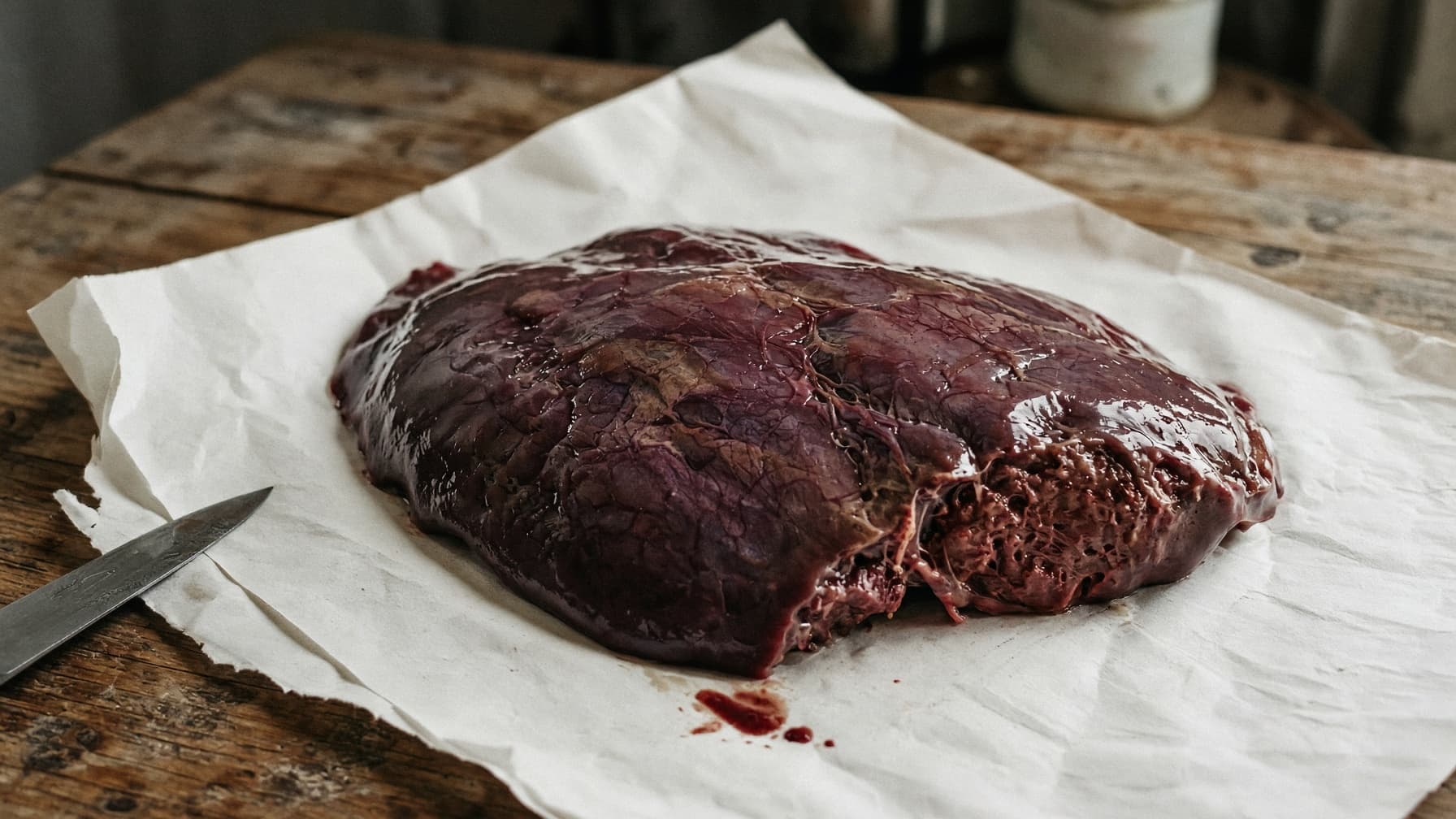
Liver is dense in retinol, B12, copper, and iron. Small amounts cover a lot. Large portions can overshoot retinol and copper.
At a glance
- Liver is one of the most nutrient-dense foods you can eat, especially for retinol, B12, folate, copper, and choline.
- The numbers vary by species, feed, and data source; tables are orientation, not a lab guarantee for the piece on your plate.
- Retinol and copper are why “more is better” is the wrong instinct here. Small amounts on a regular rhythm beat rare monster portions.
- Supplements can fill gaps, but they do not automatically stand in for what fresh liver brings as a whole food.
Role in carnivore and animal-based eating
In nose-to-tail eating, liver is the classic multivitamin bite. Muscle meat covers a lot of micronutrients, but it does not cover all of them as cleanly. The usual gaps (retinol, copper, folate, choline, and extremely high B12) are the ones liver closes, even in small portions.
Across many traditional diets, liver shows up as a particularly valued food, often given first to children, pregnant women, and people who were ill or recovering. That is history and ethnography rather than clinical proof. People noticed the density long before nutrient tables existed.
In modern practice, liver is mainly a way to raise micronutrient density without much extra energy or filler.
Orientation values (beef liver)
Treat the numbers as a rounded order of magnitude per 100 g of beef liver. They swing with species, feed, freshness, and data source. Tables give you orientation. They do not guarantee what a lab would measure.
Vitamin A as retinol / RAE is very high, often several thousand µg RAE, which is the main reason for portion control. B12 is extremely high, and copper, folate, and choline come in very good amounts.
Chicken liver is milder and often easier to find; beef liver is denser. Both have a place.
Practical dosing
The working dose is unspectacular, which is what makes it usable. For most people, 20–50 g once or twice a week is enough. This is not a 200 g Sunday challenge. Too much liver at the start often shows up as nausea and a metallic aftertaste.
The easy routes are ordinary ones: mix it into mince, cook it with onions if you eat animal-based, or just pan-fry it. Portion it fresh and freeze it. Nobody needs a plate of liver and nothing else.
Caution and limits
Very high retinol over a long stretch is not harmless. Portion control is what makes liver usable rather than a problem. In pregnancy, and in certain thyroid or metabolic situations, check with a clinician. Liver is not a “more is better” food.
Further reading
Sources
- USDA FoodData Central – Beef liver, raw / cooked
- EFSA / DGE context notes on vitamin A (retinol equivalents) — overview research recommended
This content is general information. It is not medical, dietetic, or diagnostic advice.