Recipe
Bone broth recipe: what nutrients are actually in it
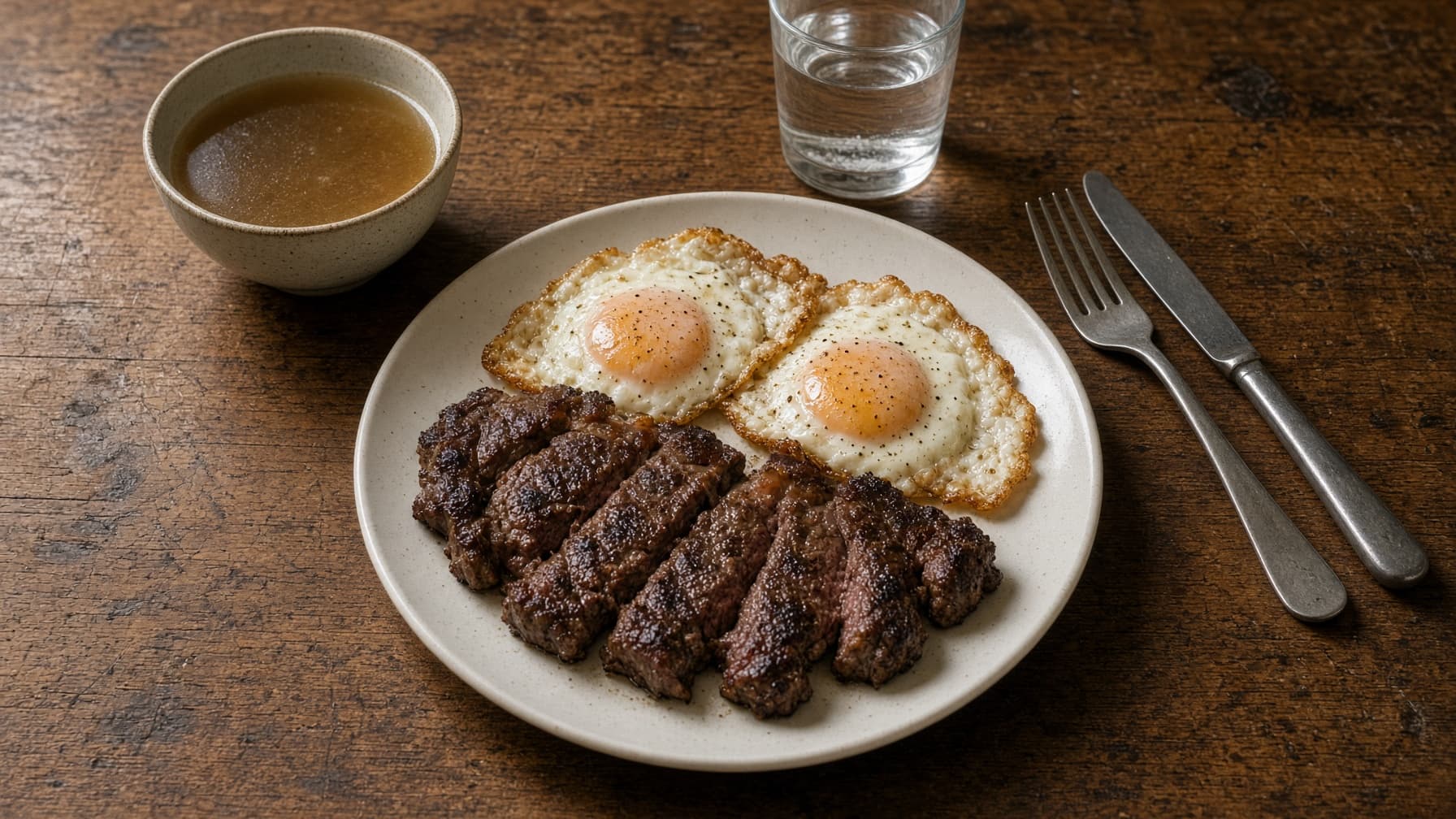
Bone broth is bones, water, and a little acid, cooked long. You get flavor, some protein, and gelatin. Minerals only in small amounts.
At a glance
- Bone broth supplies flavor, fluid, some protein and gelatin, and varying minerals. It is not a miracle.
- A long, moderate extraction with a little acid, a splash of vinegar, is ordinary kitchen practice.
- Expectations of healing collagen should stay sober.
Expectation management
Bone broth is useful as a base: to drink, for sauces, for cooking, as a fluid and electrolyte carrier, and as a way to use leftovers. It does not replace muscle meat, organs, or a thought-out electrolyte strategy. Least of all is it a medical cure.
What it can realistically deliver: flavor and mouthfeel; fluid and some sodium, depending on how you salt; gelatin / denatured collagen, visible when the broth sets in the fridge; variable and usually moderate mineral amounts; and a way not to waste connective tissue and leftover bones.
What it does not reliably do: act as a dependable, high-dose calcium source (a claim that is often oversold), or “heal” joints or the gut just by drinking it.
Basic recipe
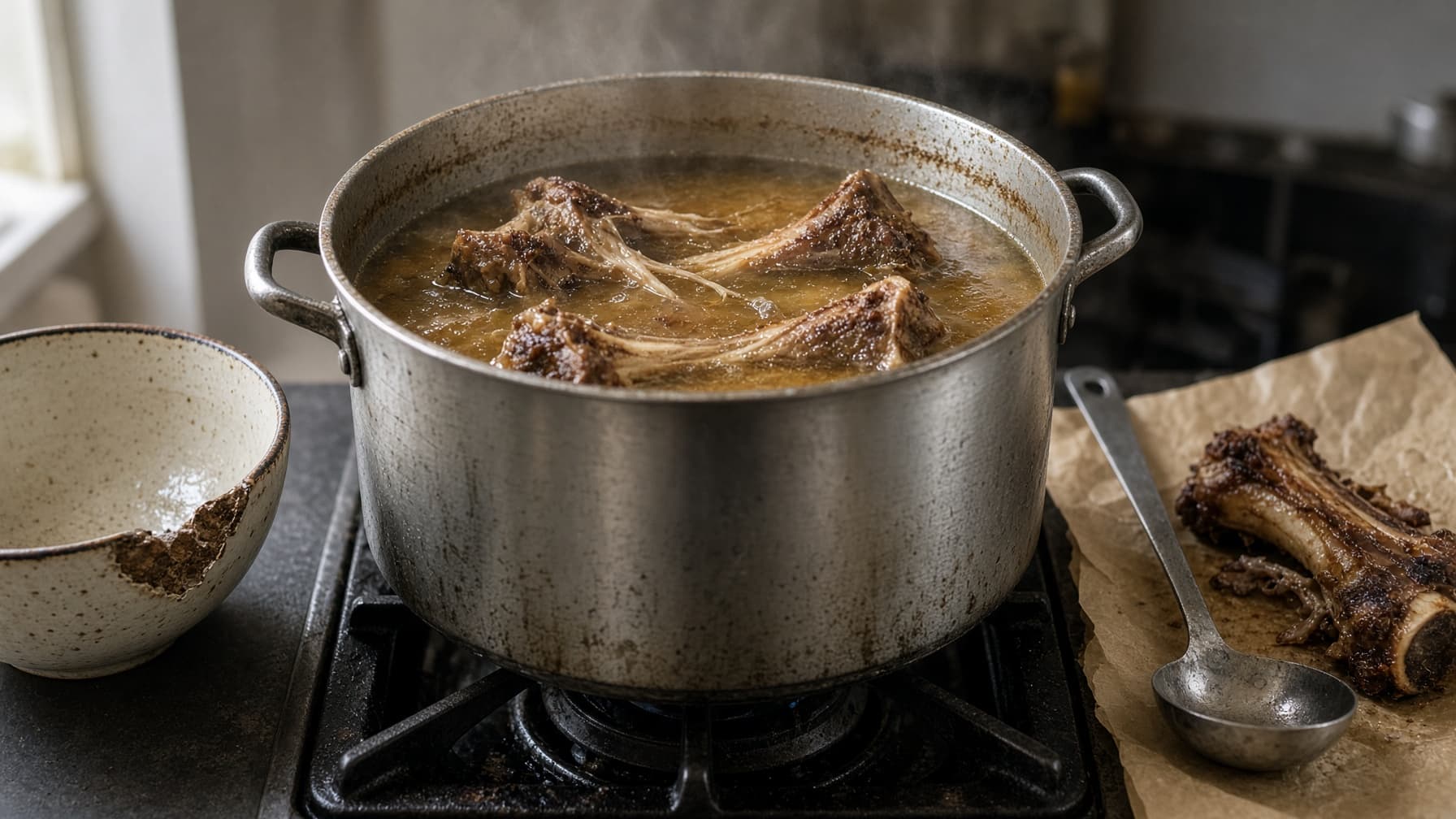
Cover the bones with cold water. Marrow bones, joints, feet, and roast leftovers all work. A little apple-cider vinegar or lemon juice helps pull minerals; that step is optional. Bring it slowly to a boil, skim the foam, then drop the heat.
The long cook is 12–24 hours in a slow cooker or on the stove, or shorter in a pressure cooker. Salt goes in at the end. Then you strain, cool, and skim the fat or eat it. It keeps several days in the fridge, longer frozen.
Nutrient retention
Do not leave it at a rolling boil for hours; that destroys more than it gains. Low heat and enough time are enough. Fresh bones and some connective tissue make a more noticeable difference than exotic add-ins.
Further reading
Sources
- Kitchen practice and limited bone-broth analyses — heterogeneous sources
This content is general information. It is not medical, dietetic, or diagnostic advice.