Carnivore: how much meat per day – and how much fat
There is no fixed amount of meat per day on carnivore; most people end up roughly at whatever fills them up, plus enough fat.
At a glance
- No study sets a daily amount of meat for carnivore.
- Protein has reference values: DGE 0.8 g per kg body weight for adults under 65, 1.0 g from 65; EFSA 0.83 g per kg.
- Fat is the main energy source on carnivore. Eating lean leaves you poorly satiated.
- Everyday yardstick: full after the meal, not hungry, not stuffed.
There is no fixed amount of meat per day on carnivore; most people end up roughly at whatever fills them up, plus enough fat. More important than the gram count is that you eat enough protein and fat and do not leave the table hungry.
Why there is no fixed gram count
No study sets how much meat someone on carnivore should eat per day. The largest dataset on people eating this way comes from an online survey of 2029 adults (Lennerz et al., 2021). In it, 85 percent ate red meat daily or more often. The survey doesn't derive an amount from that, and everything in it is self-reported.
How much you need depends on body size, activity, age, and how fatty the meat is. A fatty piece of pork neck keeps you full in a different way than the same weight of lean chicken breast.
Protein: reference values exist
There are official values for protein, but they're meant for the general population, not for carnivore. The German Nutrition Society (DGE) gives 0.8 g of protein per kg body weight per day for adults aged 19 to under 65. From 65, it gives an estimated value of 1.0 g per kg. If you're overweight, the DGE uses normal weight for the calculation, not your actual weight.
EFSA puts the figure for adults at 0.83 g per kg. It didn't set an upper limit, and it considers intakes up to twice that value safe for healthy adults.
These values are floors for adequate intake, not targets. If you eat until you're full on carnivore, you'll usually end up above them, because meat and eggs are the main protein source.
Fat: the actual energy source
On carnivore, there are hardly any carbohydrates on your plate, so your energy comes mainly from fat and protein. In the well-known Bellevue study, two men ate only meat for a year and picked the mix of lean and fat themselves. According to the authors, both got most of their calories from fat (McClellan and Du Bois, 1930).
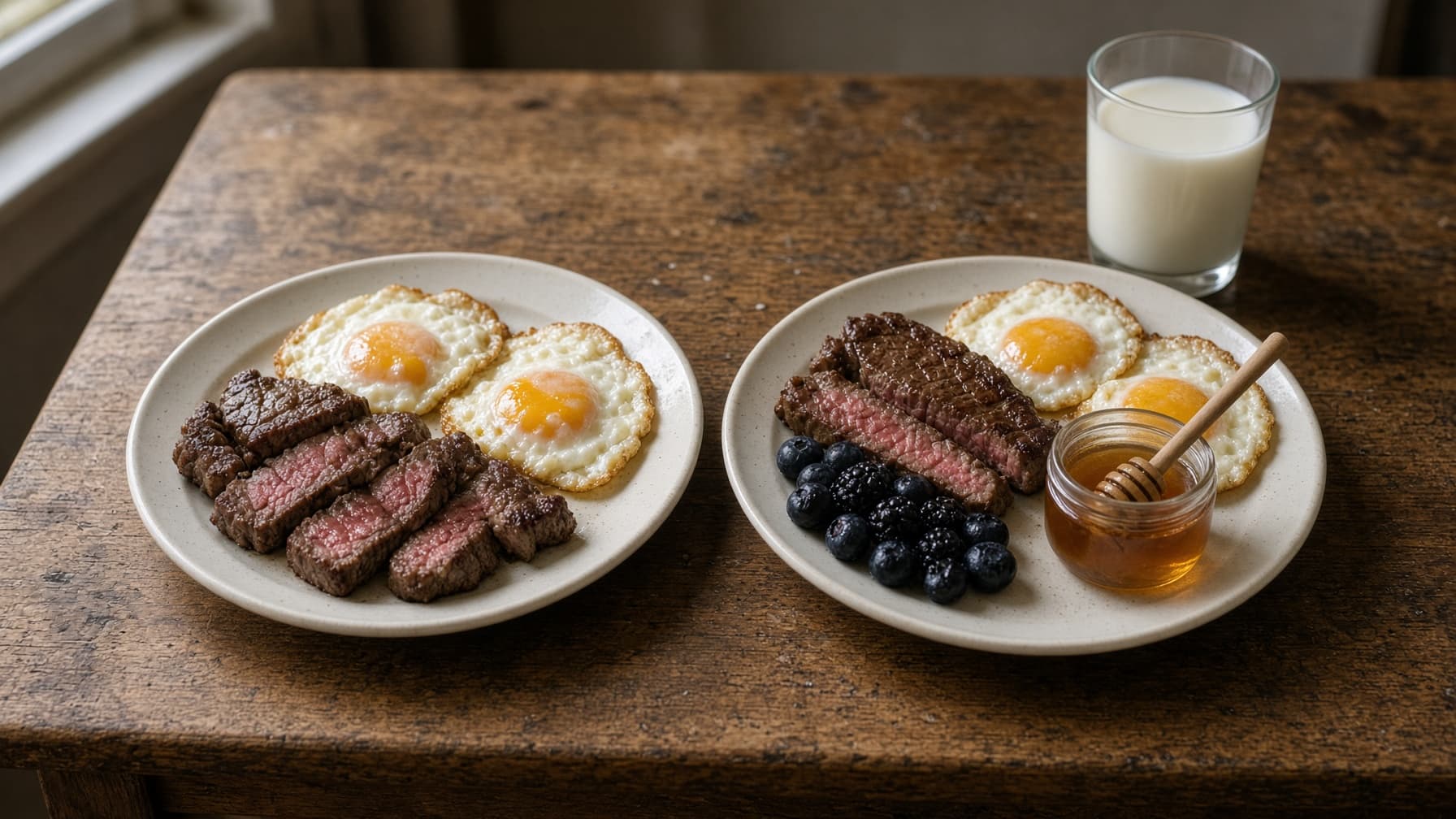
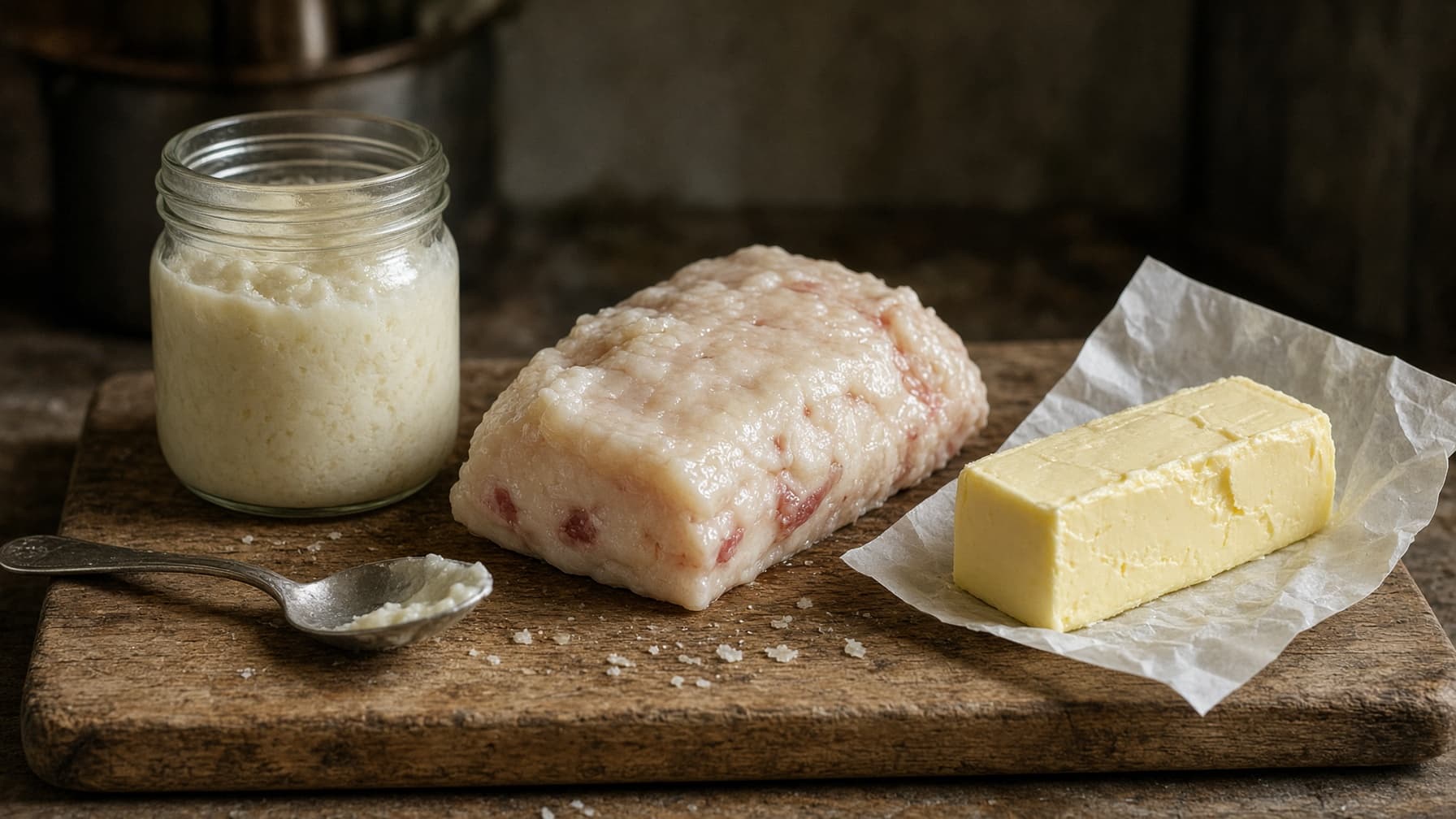
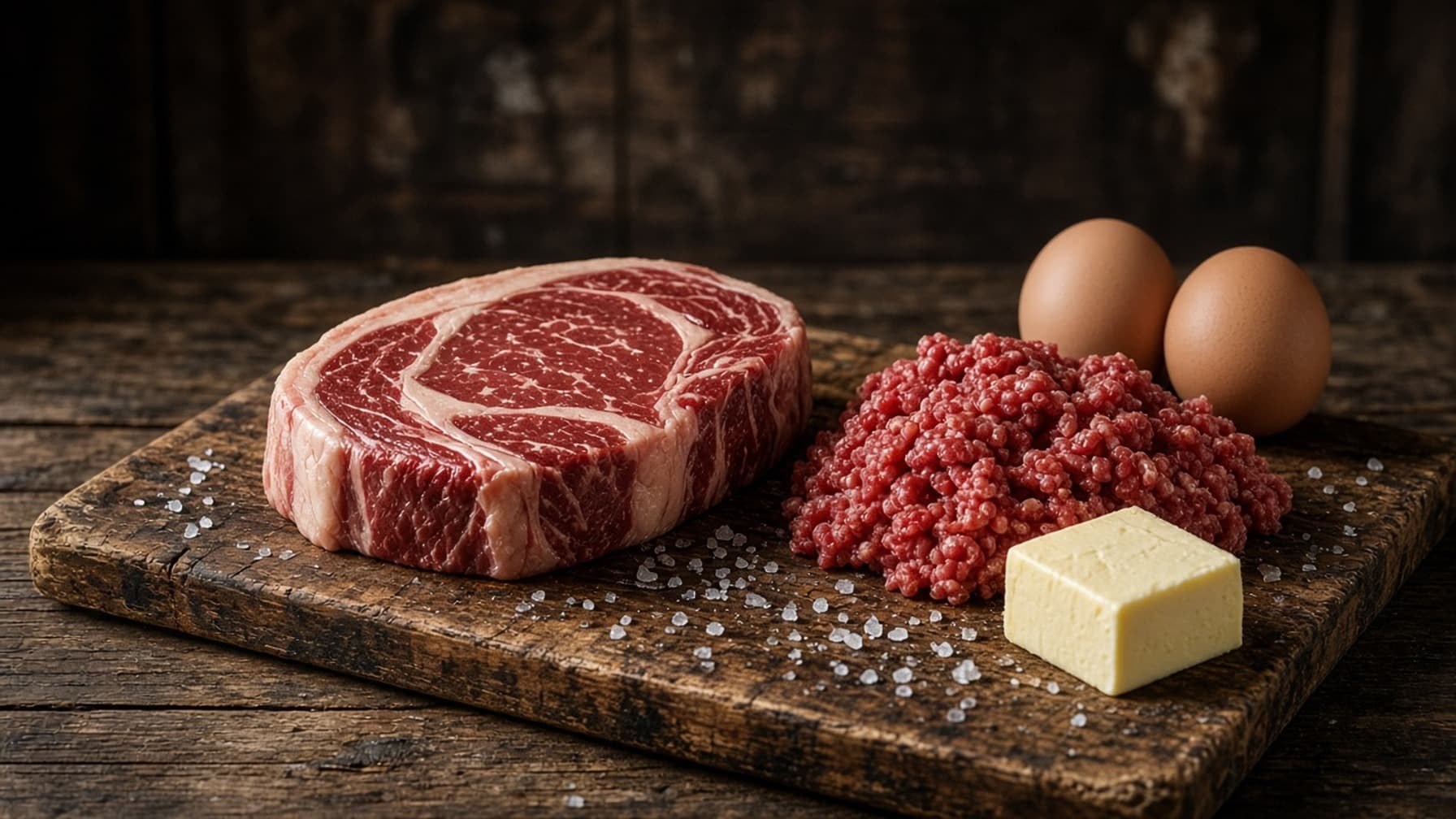
In practice, that means mince with visible fat, steaks with the fat cap, eggs, butter or tallow. If you only eat lean meat, you get plenty of protein but little energy, and you're hungry again soon. No study gives a daily gram figure for fat on carnivore, so you won't find one here either.
What to go by day to day
- You eat until you're full and aren't constantly hungry before the next meal.
- There's visible fat on the plate, not just lean meat.
- You roughly check that protein does not fall below the reference values.
- For the first weeks, you jot down energy, sleep, and digestion.
If you're hungry all the time, too little fat is a more likely culprit than too little meat.
With kidney disease, gout, pregnancy, or breastfeeding, clarify protein intake with a doctor first. This page does not replace advice.
Further reading
Sources
- DGE – Reference values for protein (0.8 g/kg bw/day age 19 to under 65; 1.0 g/kg from 65, estimated value)
- EFSA NDA Panel (2012): Scientific Opinion on Dietary Reference Values for protein. EFSA Journal 10(2):2557
- McClellan WS, Du Bois EF (1930): Clinical calorimetry XLV. Prolonged meat diets with a study of kidney function and ketosis. J Biol Chem 87:651–668
- Lennerz BS et al. (2021): Behavioral characteristics and self-reported health status among 2029 adults consuming a “carnivore diet”. Curr Dev Nutr 5(12):nzab133
This content is general information. It is not medical, dietetic, or diagnostic advice.