
Coffee on carnivore: allowed or not?
On strict carnivore, coffee is strictly speaking not included because it comes from a plant, but many people keep drinking it.
At a glance
- Coffee comes from a plant. A very strict reading of carnivore drops it; many keep it.
- On animal-based, coffee is usually not a point of debate.
- EFSA: up to 400 mg caffeine per day is safe for healthy, non-pregnant adults; up to 200 mg in pregnancy.
- Caffeine can shorten sleep even six hours before bed, and coffee stimulates the bowel.
On strict carnivore, coffee is strictly speaking not included because it comes from a plant, but many people keep drinking it. Whether you keep it depends on whether you mean strict carnivore or animal-based, and on how your sleep and digestion react.
Strict carnivore or animal-based
Coffee comes from a bean, so from a plant. If you take carnivore literally, it goes, just like tea. Most people eating carnivore keep drinking it anyway. That's your call, not a rule written down anywhere.
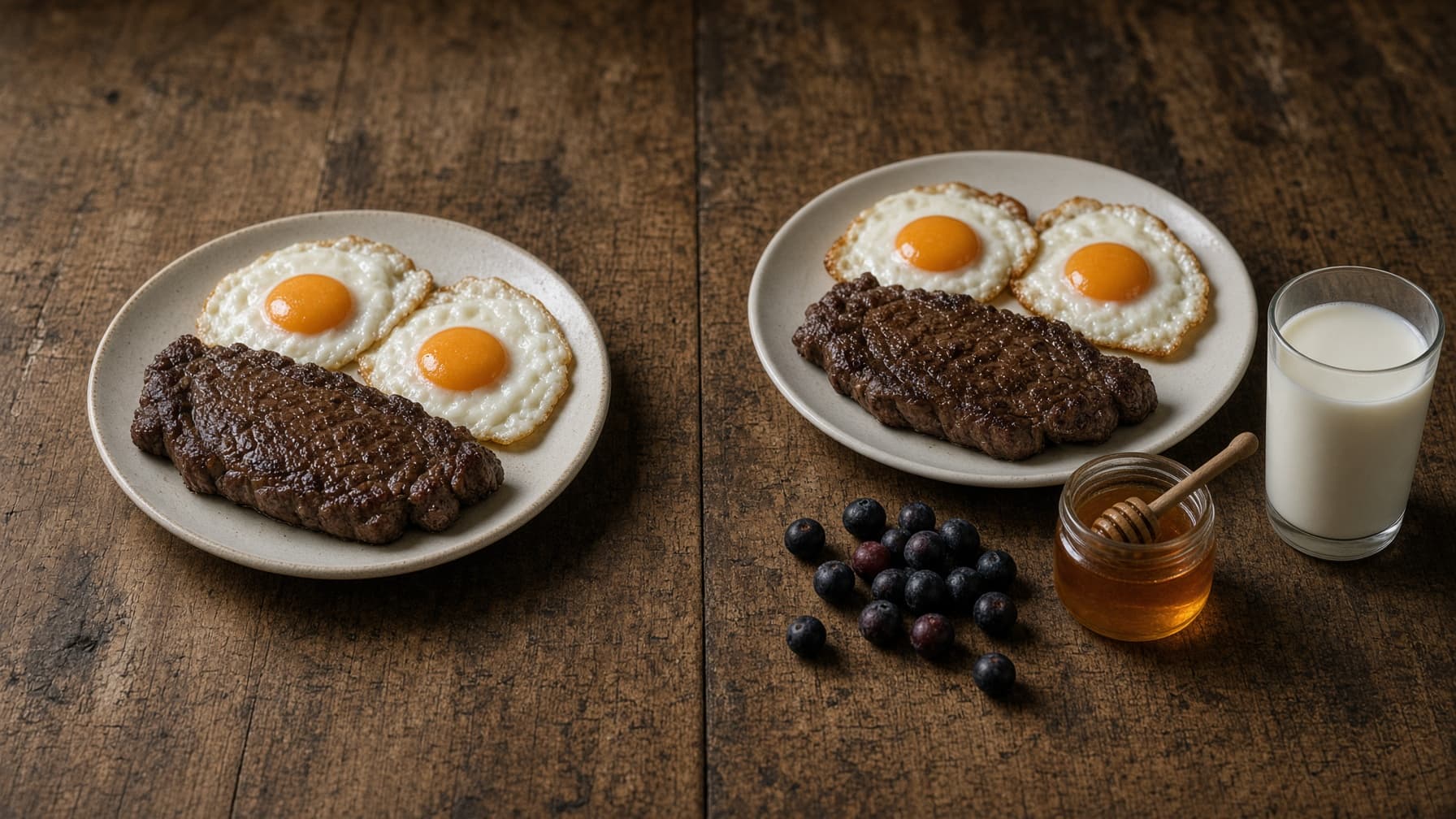
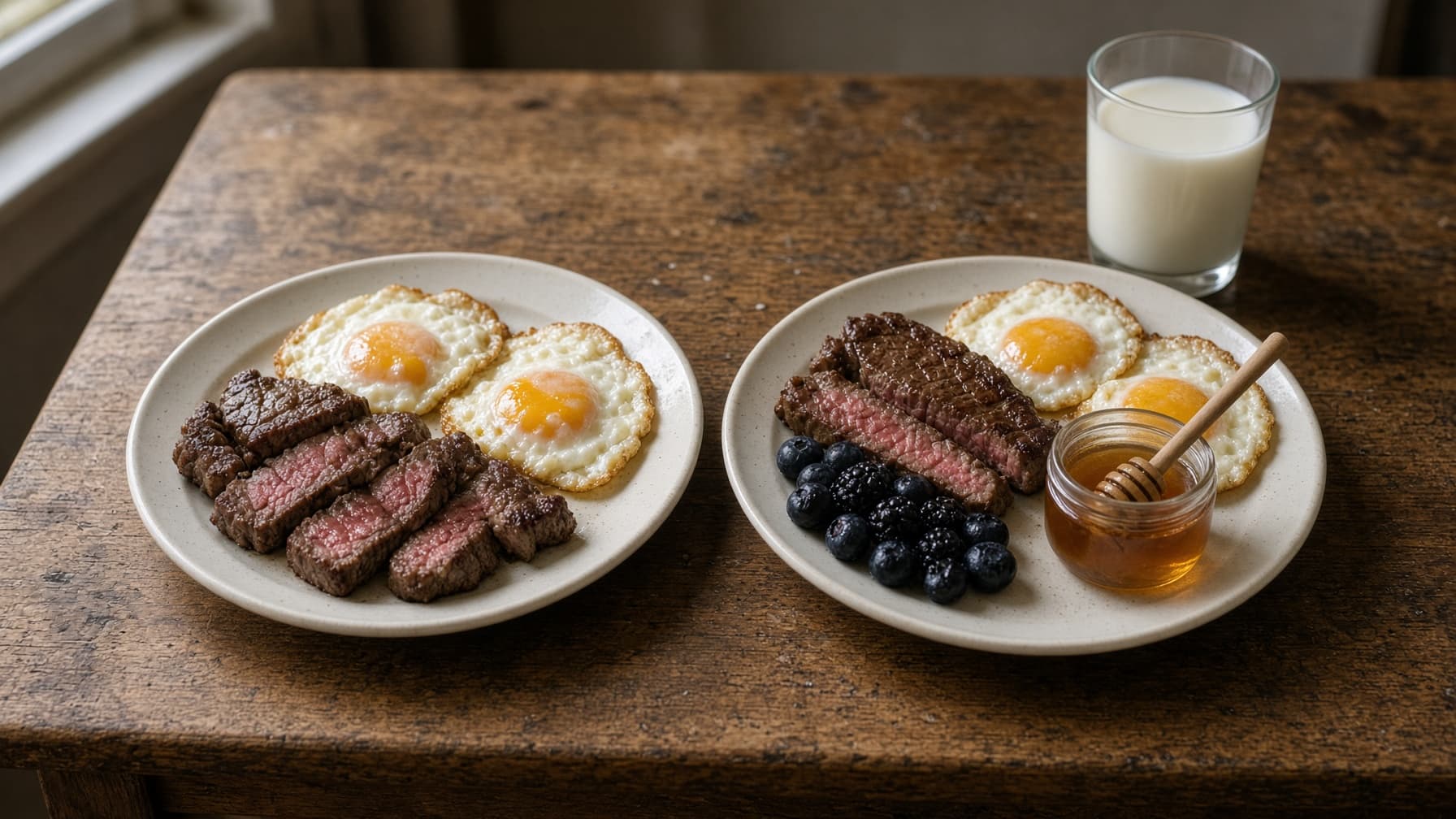
On animal-based, coffee is usually a non-issue. Some plant foods like honey or fruit are part of it on purpose anyway. By this site's definition, butter belongs to strict carnivore, while milk and cream count as animal-based additions. So cream or milk in coffee fits animal-based. Sugar, syrup, and plant-based creamers fit neither variant.
How much caffeine is safe
In 2015, EFSA looked at the point where caffeine becomes a concern for healthy people:
- Up to 400 mg of caffeine per day from all sources is safe for healthy adults, except during pregnancy.
- Single doses up to 200 mg are considered safe.
- During pregnancy, up to 200 mg per day is considered safe. For breastfeeding women, EFSA considers single doses and daily intakes up to 200 mg safe for the breastfed infant.
- Even 100 mg can shorten sleep in some people, especially close to bedtime.
How much caffeine is in a cup depends heavily on the bean, how it's made, and the size of the cup. That's why we don't give a number of cups.
Sleep
In a small study of twelve healthy sleepers, 400 mg of caffeine measurably shortened sleep, even when taken six hours before bed (Drake et al., 2013). The participants themselves barely noticed. The authors advise avoiding larger amounts of caffeine for at least six hours before sleep.
If you sleep poorly in the first weeks, look at the afternoon coffee before you blame the diet.
Digestion
Coffee stimulates the colon. In a measurement study with twelve healthy people, caffeinated coffee increased colonic activity about as much as a meal and clearly more than water (Rao et al., 1998). Decaf did not differ significantly from water.
If you're dealing with loose stools or diarrhea during the transition, try leaving coffee out for a while and see whether anything changes. If you tend toward constipation, the effect may actually help.
Keep, cut back, or drop
A useful test changes just one thing: two weeks without coffee, or coffee in the morning only. Jot down sleep, energy, and stool as you go. Then you'll see whether coffee makes a difference.
With heart rhythm problems, high blood pressure, pregnancy, or anxiety disorders, discuss caffeine with a doctor. This page does not replace advice.
Further reading
Sources
- EFSA NDA Panel (2015): Scientific Opinion on the safety of caffeine. EFSA Journal 13(5):4102
- Drake C et al. (2013): Caffeine effects on sleep taken 0, 3, or 6 hours before going to bed. J Clin Sleep Med 9(11):1195–1200
- Rao SS et al. (1998): Is coffee a colonic stimulant? Eur J Gastroenterol Hepatol 10(2):113–118
- Working definitions of carnivore vs. animal-based on this site
This content is general information. It is not medical, dietetic, or diagnostic advice.